Calculate Running Costs From Your Own Device Measurements
Record the measurement instrument, device mode and the interval measured. Keep standby and active observations separate.

Start with your own situation
Record the measurement instrument, device mode and the interval measured. Keep standby and active observations separate.
Work through the record
Choose one route. For a constant-power scenario, divide your measured watts by 1,000 and multiply by hours to get kilowatt-hours. For an interval energy reading, use the measured kWh directly: do not multiply it by hours again. Multiply kWh by your own dollar price per kWh; convert cents to dollars first. Keep active and standby hours from overlapping.
Your printable worksheet
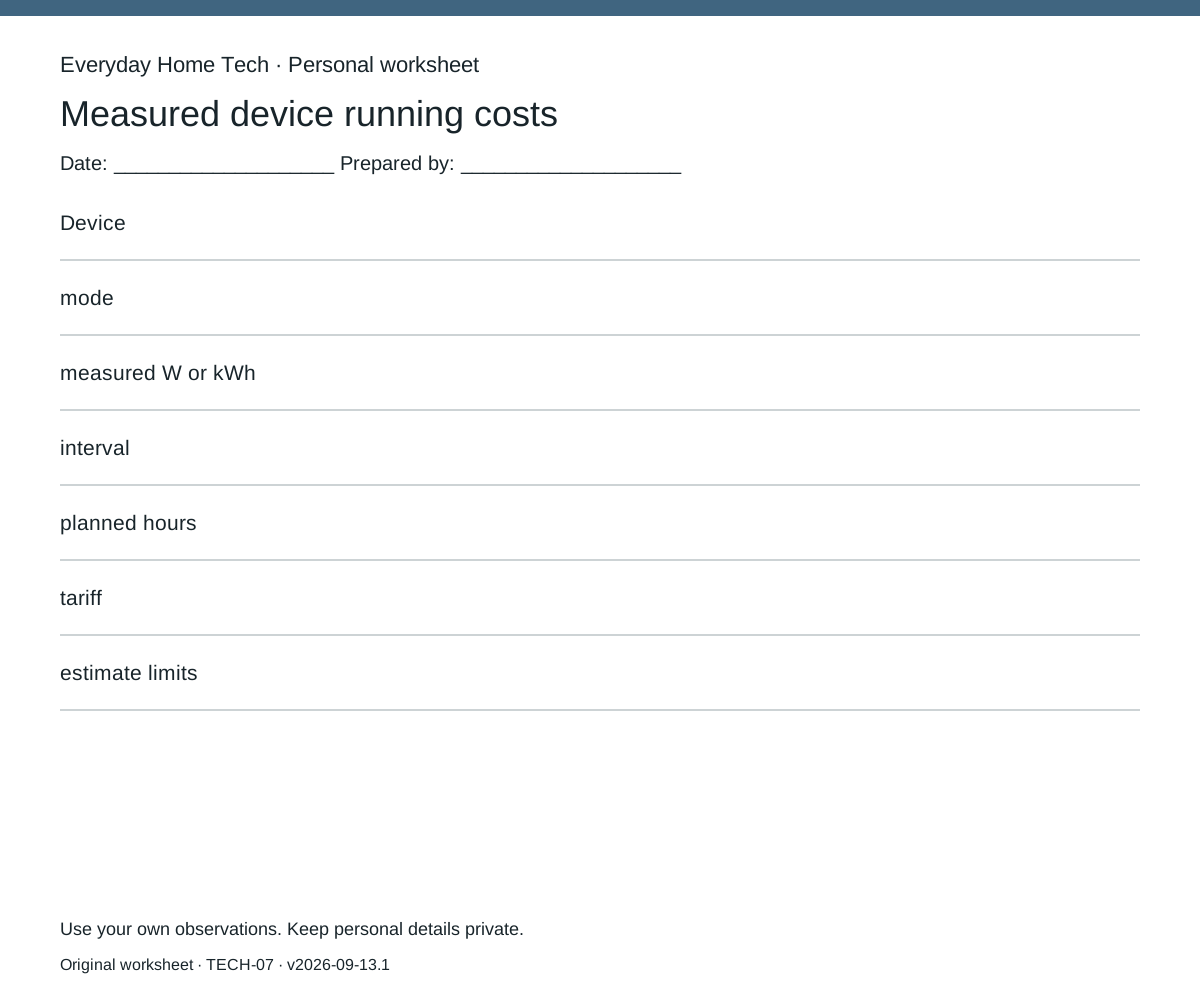
Use one sheet per measured device running costs record. Fill these fields: Device / mode / measured W or kWh / interval / planned hours / tariff / estimate limits. Leave missing information marked unknown; do not silently substitute an estimate.
Make the next decision
Retain the instrument, interval and operating-mode notes with the total. For variable power, the interval reading describes only that interval; extrapolating it requires a labeled assumption about future use. Exclude unrelated fixed utility charges unless you state an allocation. The result is a cost scenario, not an annual physical test or a promised saving.
Documentary context
EIA distinguishes watts, a measure of power, from watt-hours, energy used over time; one kilowatt equals 1,000 watts.
How this guide was prepared
Original Codex-assisted planning guidance and a blank worksheet. Reader inputs are not collected or represented as observations. Any documentary context is a short paraphrase of a linked primary source checked on September 13, 2026; no product testing, prices or efficacy results are claimed.
Source record
EIA-V1-UNITS — External record retrieved
EIA distinguishes watts, a measure of power, from watt-hours, energy used over time; one kilowatt equals 1,000 watts.
Retrieved 2026-09-13